Editor’s note: This guide replaces our earlier best grill for steak article, which is no longer available. It was rewritten in November 2026 as a buying guide to grill types for steak, with links to our detailed reviews. We haven’t tested these grills ourselves; for specific models, see the linked reviews, which are based on manufacturers’ specifications.
Quick answer
- Great steak needs high heat plus a cooler zone: sear over intense direct heat, then finish thicker steaks over gentler heat.
- Charcoal kettle: very hot direct heat, easy two-zone setup and smoky flavor. A classic for steak.
- Gas grill: the most convenient everyday choice. Pick one with enough burners to run a hot and a cool zone.
- Flat-top griddle or cast iron: edge-to-edge crust, and no flare-ups.
- Pellet grill: excellent for reverse-searing thick steaks, but check how hot it gets before relying on it to sear.
- Whatever you use, an instant-read thermometer matters as much as the grill.
There’s no single “best” grill for steak. The right choice depends on how you like your steak, how often you grill and whether you value flavor or convenience most. What every steak grill needs is the ability to get very hot for searing and to offer a cooler area to finish thicker cuts without burning the outside. Here’s how the main grill types compare for steak.
Grill types for steak compared
| Grill type | Searing | Two-zone cooking | Flavor | Convenience |
|---|---|---|---|---|
| Charcoal kettle | Excellent | Easy: bank coals to one side | Smoky, char-grilled | Slower to start and clean |
| Gas grill | Good to very good, depending on the model | Easy with 2+ burners | Clean grilled flavor | Fast start, easy temperature control |
| Flat-top griddle | Excellent full-surface crust | Possible with separate burners | Seared, no smoke flavor | Easy, no flare-ups |
| Pellet grill | Varies by model | Indirect cooking by design | Wood-smoke flavor | Set-and-forget |
| Indoor electric grill | Limited by plate temperature | Usually not | Mild | Very convenient, year-round |
Charcoal kettle grills
A charcoal kettle is the classic steak grill. Pile lit coals on one side for a scorching sear zone and leave the other side empty for gentle indirect heat. You get real char and a light smoky flavor. The trade-offs are time (lighting and cleaning up) and a learning curve with vents and coal placement.
See our Weber kettle grill reviews and charcoal vs gas grills.
Check Charcoal Kettle Grills on Amazon
Gas grills
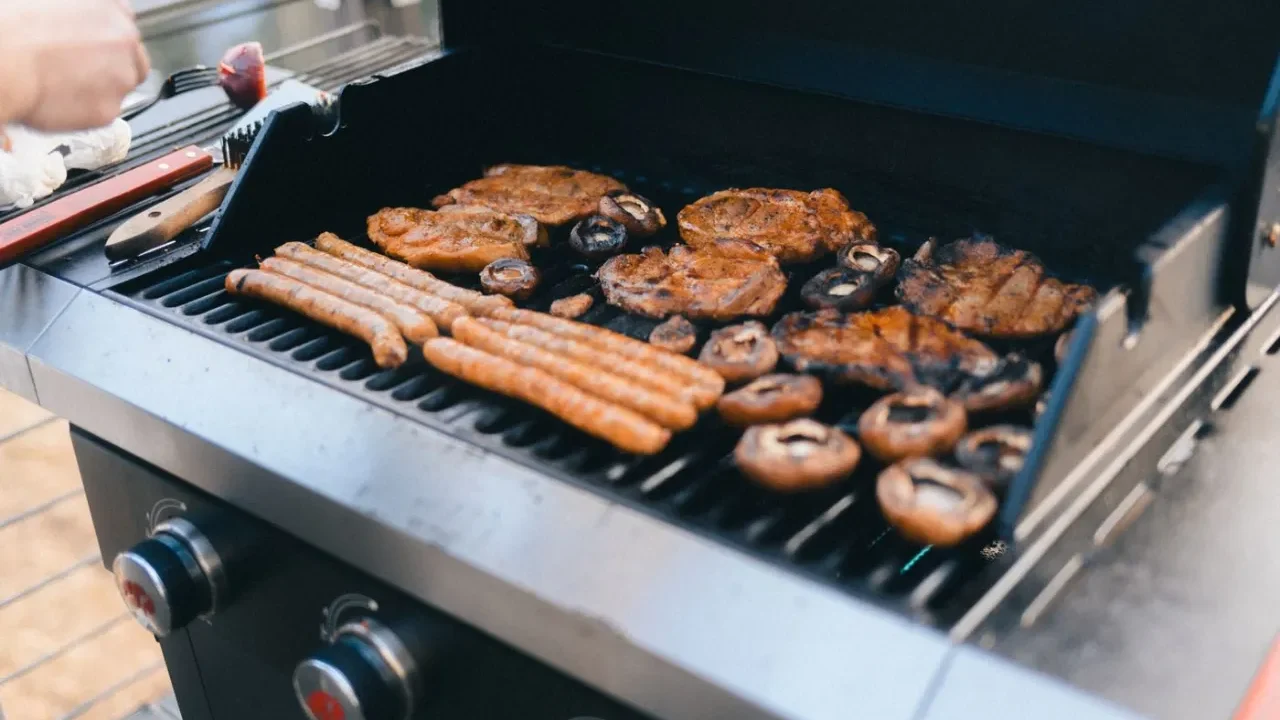
Gas grills win on convenience: they light instantly and adjust quickly, which makes weeknight steaks easy. For steak, look for at least two burners so you can run one side on high and the other on low, sturdy grates that hold heat, and a lid thermometer. Grills with a dedicated sear burner or zone can help, but a well-preheated standard gas grill sears steaks well too.
See our best gas grills under $300, Weber Spirit II E-210 vs E-310 and Weber Genesis II E-310 vs S-310.
Flat-top griddles
A griddle gives the entire surface of the steak contact with the hot steel, producing an even, deep crust, the same idea as a cast-iron skillet on a bigger scale. There are no flare-ups, and you can cook sides at the same time. You won’t get grill marks or much smoke flavor. See our best flat-top grills.
Pellet grills
Pellet grills burn wood pellets with thermostatic control, which is ideal for the reverse sear: smoke a thick steak at low temperature until it’s nearly done, then sear it hot to finish. Many pellet grills don’t reach the extreme direct heat of charcoal, so check the maximum temperature and whether the model has a direct-flame or sear option. See Pit Boss vs Traeger and best pellet grills under $500.
Indoor and portable options
No outdoor space? An indoor electric grill or smokeless grill can cook a good steak, though plate temperatures limit the sear. A hot cast-iron pan is often a better indoor choice for thick steaks. See our smokeless indoor grills. For camping and tailgates, see Coleman RoadTrip vs Weber Q.
What to look for in a steak grill
- High maximum heat for searing.
- Two-zone capability: multiple burners, or room to bank coals.
- Heavy grates, such as cast iron or thick stainless, that hold heat and leave good marks.
- Good lid seal and vents for controlling heat on thick cuts.
- Grease management to limit flare-ups from fatty steaks like ribeye.
How to grill a great steak
- Preheat thoroughly, with the lid closed, for 10–15 minutes on gas or until coals are ashed over.
- Pat the steak dry and season it.
- Sear over direct heat, then move thick steaks to the cooler side to finish.
- Check the temperature in the thickest part with an instant-read thermometer. The USDA-based safe minimum for beef steaks is 145°F with a 3-minute rest. See our safe cooking temperature chart.
- Rest the steak before slicing.
Choosing your cut? Read New York strip vs ribeye and ribeye vs sirloin.
Bottom line
For the best combination of heat and flavor, a charcoal kettle is hard to beat. For everyday convenience, a two-burner or larger gas grill does the job well. A griddle gives the best edge-to-edge crust, and a pellet grill excels at reverse-searing thick cuts. Whatever you choose, preheat properly, use two zones and cook to temperature with a good thermometer.
FAQ
Is charcoal or gas better for steak?
Charcoal typically gets hotter and adds smoky flavor; gas is faster and easier to control. Both make excellent steak with a proper two-zone setup.
Can you sear a steak on a pellet grill?
It depends on the model’s maximum temperature and whether it offers direct-flame or sear options. Many cooks use a pellet grill for the low-temperature stage of a reverse sear, then finish in a hot pan or on a separate sear zone.
What temperature should steak be cooked to?
The USDA-based safe minimum for beef steaks is 145°F followed by a 3-minute rest.
Sources: Food-safety temperatures: FoodSafety.gov. Model-specific details are in the linked reviews, which cite manufacturers’ specifications. Checked November 2026.