Editor’s note: This guide replaces our earlier basal thermometer article, which is no longer available. It was rewritten in November 2026, and its health information comes from Mayo Clinic (linked at the end). It’s general information, not medical advice. Talk to your healthcare professional about fertility tracking or birth control.
Quick answer
- A basal thermometer is a sensitive digital oral thermometer for tracking your basal body temperature (BBT), your temperature when fully at rest.
- Why it needs to be precise: after ovulation, BBT typically rises by less than ½°F (0.3°C), according to Mayo Clinic. Mayo says the thermometer should be accurate to two decimal places.
- How to use it: take your temperature every morning, before getting out of bed, at the same time and the same way each day, and record it.
- Know the limits: BBT confirms ovulation after it happens, illness and some medicines can affect it, and Mayo Clinic says BBT alone may not be enough to prevent pregnancy.
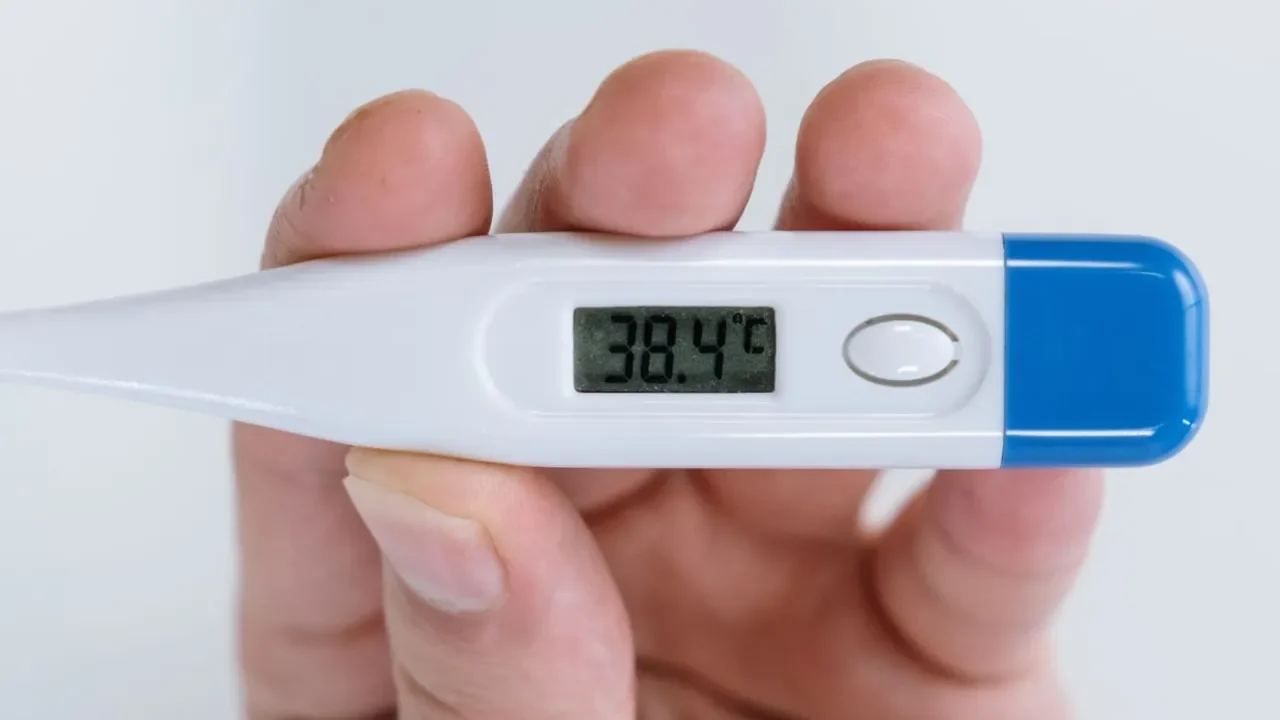
If you’re trying to conceive, or learning fertility awareness methods, you’ll quickly come across the basal thermometer. It looks like an ordinary digital thermometer, but it’s designed to detect the very small temperature shift that follows ovulation. This guide explains what a basal thermometer does, what features matter and how to chart your temperature.
What is basal body temperature?
Basal body temperature is your body’s temperature when it’s fully at rest. Mayo Clinic explains that ovulation, when an ovary releases an egg, may raise BBT slightly. The rise is typically less than ½°F (0.3°C). Ovulation has likely happened when the slightly higher temperature stays steady for three days or more.
By recording your BBT daily, over several cycles you may be able to see a pattern and predict when you’re likely to ovulate. In many people, fertility is highest during the two to three days before BBT rises.
Basal thermometer vs regular thermometer
| Feature | Basal thermometer | Typical fever thermometer |
|---|---|---|
| Purpose | Tracking small day-to-day changes in resting temperature | Checking for a fever |
| Display precision | Usually two decimal places (e.g. 97.62°F) | Usually one decimal place (e.g. 97.6°F) |
| Memory | Often stores the last reading or a history; some sync to apps | Often last reading only |
| When used | Every morning on waking | When you feel unwell |
Because the shift you’re looking for is a fraction of a degree, a thermometer that only shows one decimal place can hide it. Mayo Clinic recommends one that’s accurate to two decimal places. Check the stated accuracy, not just the number of digits on the display.
What to look for in a basal thermometer
- Two-decimal precision and stated accuracy. Look for readings to 0.01° and a published accuracy figure in the product details or manual.
- Memory recall. A thermometer that remembers the last reading lets you take your temperature half-awake and record it later.
- Backlit display. Handy for early-morning readings without turning on a light.
- Fever alarm and beeper volume. A quiet or silent mode avoids waking a partner.
- App syncing (optional). Some basal thermometers send readings to a fertility-tracking app. Mayo Clinic suggests talking to your healthcare professional about the risks and benefits before relying on a cycle-tracking app.
- Oral use. Mayo Clinic’s guidance refers to a digital oral thermometer or one designed for BBT. Whatever type you choose, measure the same way every day.
Check Basal Thermometers on Amazon
How to take and chart your basal body temperature
- Take it first thing in the morning, before getting out of bed. Keep the thermometer within reach.
- Be consistent: measure the same way and at about the same time every day.
- Record every reading on a paper chart or in an app.
- Look for the shift: a slightly higher temperature that stays steady for three or more days suggests ovulation has happened.
- Note anything unusual, such as illness, fever, a late night or new medicine, so you can interpret odd readings.
Patterns usually become clearer after a few cycles. Many people combine BBT with tracking cervical mucus. Mayo Clinic calls this combination the symptothermal method, and some people also add a fertility monitor that measures hormones in urine.
What can throw off your readings
According to Mayo Clinic, factors other than ovulation that can raise or lower BBT include illness, infections, fever, some medicines and certain gynecologic conditions. Mayo also notes that BBT tracking might not be a good birth control choice if you recently gave birth, recently stopped hormonal birth control, are breastfeeding, have irregular cycles, are approaching menopause, or have a condition that affects ovulation, such as polycystic ovary syndrome. Talk to your healthcare professional in these situations.
Using BBT to conceive or to avoid pregnancy
- Trying to conceive: Mayo Clinic says the best time to have sex is typically two to three days before ovulation. Because sperm can survive up to five days, pregnancy is possible across several days.
- Avoiding pregnancy: Mayo Clinic says BBT alone may not be enough. Research it cites suggests about 1 in 4 people using fertility awareness-based methods become pregnant after a year of typical use, and these methods give no protection from sexually transmitted infections. Speak with a healthcare professional before relying on it.
- Possible early sign of pregnancy: Mayo Clinic notes that a BBT rise after ovulation lasting 18 days or more may be an early sign of pregnancy. A pregnancy test or your healthcare professional can confirm it.
Bottom line
A basal thermometer is a precise digital thermometer that helps you spot the small temperature rise that follows ovulation. Choose one that reads to two decimal places with a clearly stated accuracy, take your temperature at the same time every morning, and chart it over several cycles. Pair it with other fertility signs and your healthcare professional’s advice, especially if you’re using it to avoid pregnancy.
For other medical thermometers, see our guides to taking a temperature correctly, clinical thermometers and Fahrenheit vs Celsius.
FAQ
Can I use a regular thermometer to track basal body temperature?
Mayo Clinic recommends a digital oral thermometer or one designed for BBT that’s accurate to two decimal places. Many fever thermometers only display one decimal place, which can make the small post-ovulation rise harder to see.
How much does basal body temperature rise after ovulation?
Typically less than ½°F (0.3°C), according to Mayo Clinic.
When should I take my basal temperature?
Every morning, as soon as you wake up and before getting out of bed, at about the same time each day.
Does a basal thermometer predict ovulation?
It shows that ovulation has likely already happened, once the higher temperature has held for three or more days. Charting over several cycles can help you predict future ovulation if your cycles are regular.
Is the basal body temperature method reliable birth control?
Mayo Clinic says it’s less effective than other forms of birth control and may not be enough on its own. Talk to your healthcare professional about your options.
Sources: Mayo Clinic, Basal body temperature for natural family planning (updated September 2026). Checked November 2026.