Key takeaways
- Whole cuts of beef, pork, lamb, veal and fish: 145°F (63°C), plus a 3-minute rest for meat.
- Ground meat and sausage: 160°F (71°C).
- All poultry, leftovers and casseroles: 165°F (74°C).
- Colour is not a reliable sign of doneness. A food thermometer is the only way to know.
Cooking to a safe minimum internal temperature is the simplest, most reliable way to prevent food poisoning at home. The figures below come from the U.S. government’s FoodSafety.gov chart, which is based on USDA and FDA guidance. We have added practical notes on where and how to take the reading, because a correct number in the wrong spot is still a wrong reading.
Safe minimum internal temperature chart
| Food | Minimum internal temperature | Rest time |
|---|---|---|
| Beef, bison, veal, goat, lamb — steaks, roasts, chops | 145°F (63°C) | 3 minutes |
| Pork — steaks, roasts, chops | 145°F (63°C) | 3 minutes |
| Raw ham | 145°F (63°C) | 3 minutes |
| Ground meat and sausage (beef, pork, lamb, veal) | 160°F (71°C) | — |
| Rabbit and venison — wild or farm-raised | 160°F (71°C) | — |
| Egg dishes (frittata, quiche) | 160°F (71°C) | — |
| Poultry — whole bird, breasts, legs, thighs, wings, ground poultry, giblets, sausage and stuffing inside poultry | 165°F (74°C) | — |
| Casseroles (with or without meat) | 165°F (74°C) | — |
| Leftovers (any type) | 165°F (74°C) | — |
| Precooked ham (to reheat) | 165°F (74°C); 140°F (60°C) if packaged in a USDA-inspected plant | — |
| Fish (whole or fillet) | 145°F (63°C), or until flesh is opaque and separates easily with a fork | — |
For shrimp, lobster, crab and scallops, FoodSafety.gov says to cook until the flesh is pearly or white and opaque. Cook clams, oysters and mussels until their shells open. Cook raw eggs until the yolk and white are firm.
Why rest time matters
After you take a roast or chop off the heat, its temperature stays steady or keeps rising for a few minutes. The guidance counts this rest time as part of making the meat safe, so rest whole cuts for 3 minutes before carving. Ground meat and poultry have no rest requirement. They simply need to reach their full temperature.
Where to put the thermometer
USDA’s Food Safety and Inspection Service says to place the thermometer in the thickest part of the food, away from bone, fat or gristle. For thin foods such as burgers or chicken breasts, insert the probe through the side until the tip reaches the centre.
- Whole poultry: check the innermost part of the thigh and wing and the thickest part of the breast.
- Roasts: aim for the geometric centre, and check more than one spot on irregular shapes.
- Several pieces: check each piece. Size and position in the pan mean they rarely finish together.
- Casseroles and egg dishes: check the centre, which is the last place to heat through.
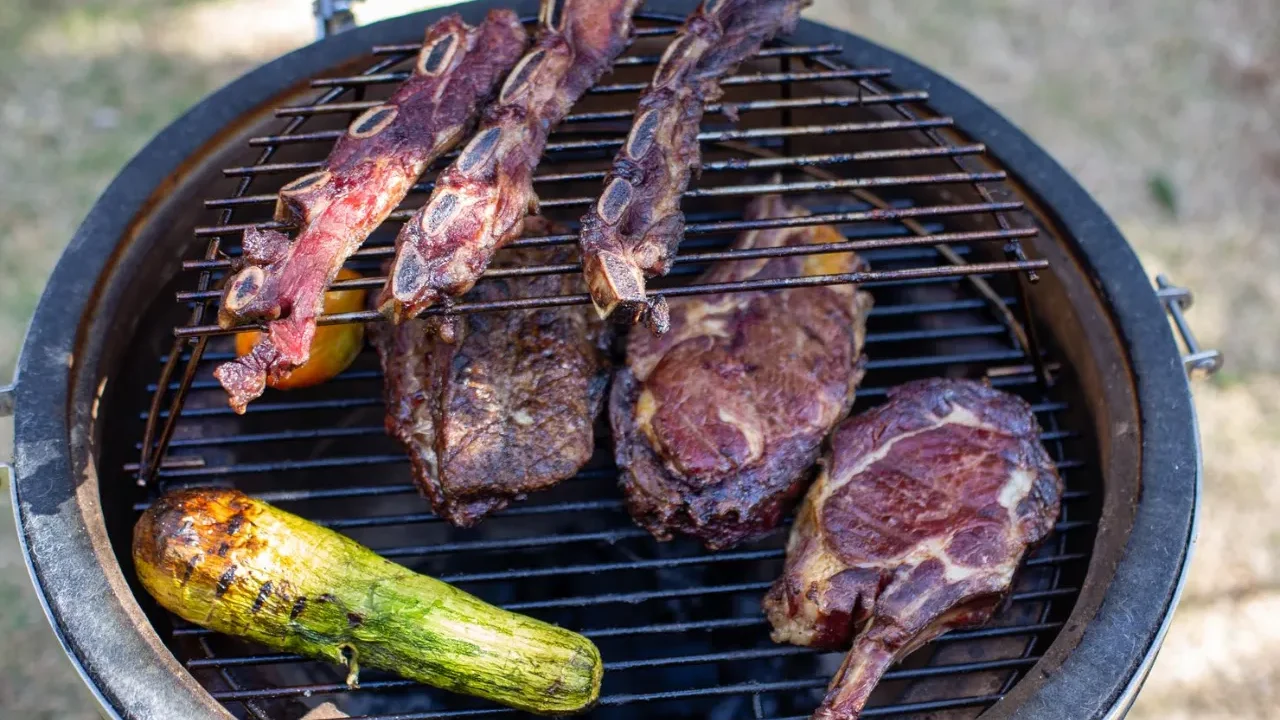
Don’t judge by colour. FSIS notes that a hamburger cooked to 160°F, as measured with a food thermometer, is safe regardless of colour. The reverse is also true: meat can brown before it is safe.
Which thermometer should you use?
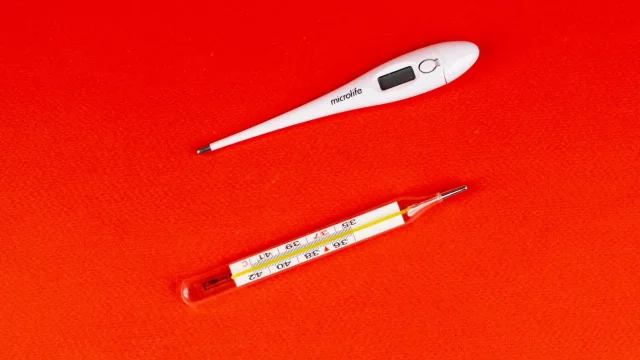
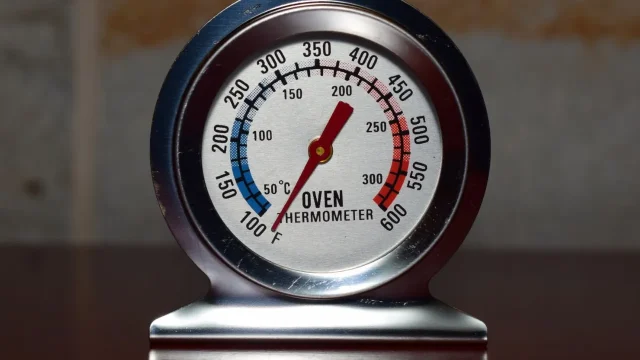
For checking these temperatures, a digital instant-read probe is the most practical tool for most kitchens. For long roasts and smoking, a leave-in or wireless probe lets you watch the temperature without opening the oven. Infrared thermometers only measure surface temperature, so they cannot confirm internal doneness. Our guide on how to choose a meat thermometer compares the options.
Whichever you use, check its accuracy now and then with the ice-water method in our calibration guide.
Frequently asked questions
Is pork safe at 145°F?
Yes. Pork steaks, roasts and chops are safe at 145°F (63°C) followed by a 3-minute rest, according to FoodSafety.gov. Ground pork and pork sausage need 160°F (71°C).
What temperature should chicken be?
All poultry, including ground chicken and turkey and any stuffing cooked inside the bird, should reach 165°F (74°C).
Do I need to reheat leftovers to a specific temperature?
Yes. Reheat leftovers of any type to 165°F (74°C).
Can I convert these to Celsius?
The chart shows both scales. For any other number, use our Fahrenheit and Celsius converter.
Sources: FoodSafety.gov — Safe Minimum Internal Temperature Chart (last reviewed November 21, 2024); USDA FSIS — Food Thermometers. This article is general information; follow local food-safety rules if you cook commercially.