The short version
- Probe thermometers measure the temperature inside something: meat, liquids, dough.
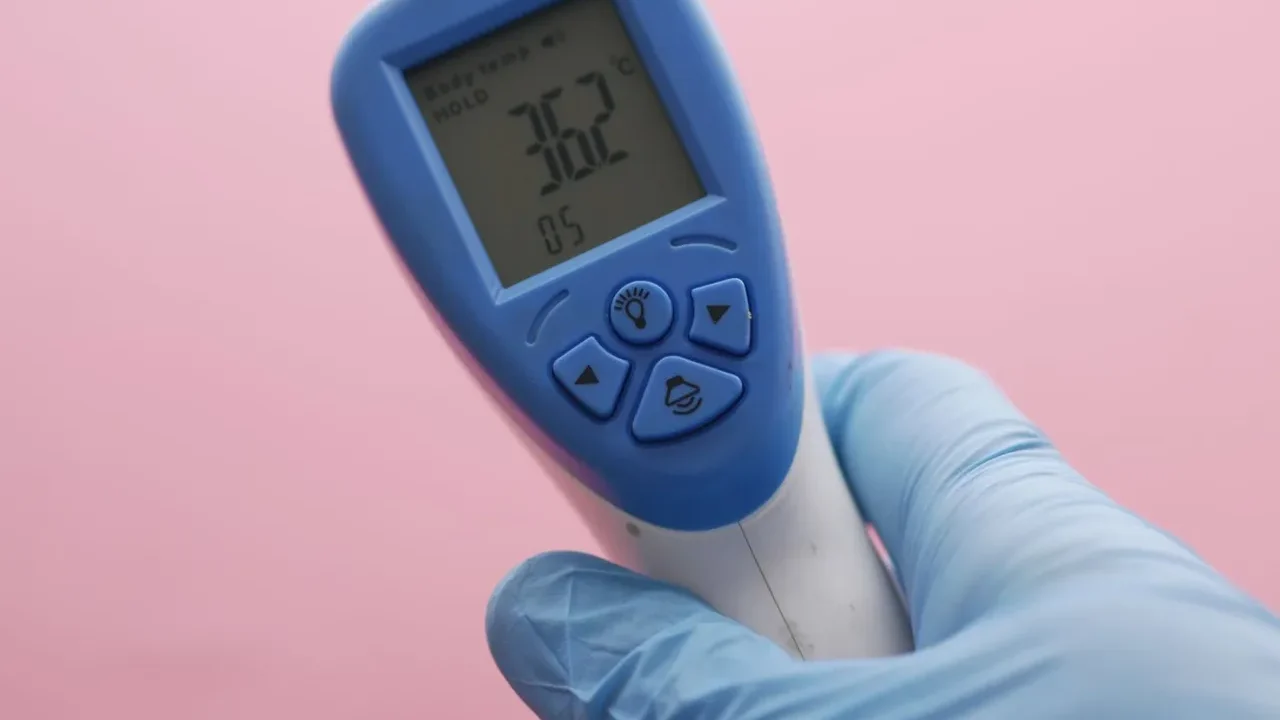
- Infrared thermometers measure the temperature of a surface from a distance, without touching it.
- For food safety you need a probe. An infrared reading cannot tell you if a chicken breast is cooked through.
Infrared “temperature guns” and probe thermometers look like they do the same job, but they measure different things. Picking the wrong one is one of the most common thermometer mistakes. Here is how each works, where each is the right tool, and what to look for when buying.
How each type works
Probe thermometers
A probe has a temperature sensor, usually a thermistor or thermocouple, near the tip of a metal stem. When you insert it, the sensor reaches the temperature of whatever surrounds it, so you get an internal temperature reading.
Infrared thermometers
Every object gives off infrared energy, and the amount depends on its temperature. An infrared thermometer collects that energy through a lens and converts it into a temperature reading. It never touches the object, which is why it is fast and safe on very hot surfaces. It only sees the outer surface.
Side-by-side comparison
| Probe thermometer | Infrared thermometer | |
|---|---|---|
| Measures | Internal temperature | Surface temperature only |
| Contact | Must be inserted | Non-contact, from a distance |
| Food safety checks | Yes — the right tool | No |
| Great for | Meat, poultry, fish, liquids, bread, candy | Pans, griddles, pizza stones, grills, HVAC vents, engines, fridge shelves |
| Affected by | Probe placement | Emissivity, distance-to-spot ratio, steam, shiny surfaces |
Getting accurate infrared readings
Emissivity
Emissivity describes how well a surface gives off infrared energy, on a scale from 0 to 1. Most consumer infrared thermometers default to about 0.95, which suits matte, dark and organic surfaces such as food, cast iron and painted metal. Shiny surfaces like polished stainless steel or aluminium have low emissivity and usually read lower than their true temperature. Some models let you adjust emissivity. A simple workaround is to measure a matte area, or a small piece of masking tape on the surface.
Distance-to-spot ratio
The distance-to-spot (D:S) ratio tells you how big an area the thermometer averages. At 12:1, from 12 inches away the reading covers a circle about 1 inch across. Move further away and the spot grows, so you may average in the cooler surroundings. Get close enough that the spot sits well inside the surface you care about.
Things that block or confuse the reading
- Steam, smoke or dust between the thermometer and the surface
- Glass: most infrared thermometers read the glass itself, not what is behind it
- Reflective surfaces reflecting heat from elsewhere
Which should you buy?
If you cook, buy a probe thermometer first. Our meat thermometer buying guide explains the types. Add an infrared thermometer if you sear in cast iron, bake pizza on a stone, or want to check HVAC vents and appliances around the house.
Etekcity Lasergrip 774
Infrared surface thermometer
A popular non-contact temperature gun for griddles, pizza stones, HVAC vents and engines. Surface readings only.
- Range
- -58 to 842°F (-50 to 450°C)
- Accuracy
- ±3.6°F below 212°F; ±2% above
- Distance-to-spot
- 12:1
- Response
- ≤500 ms
- Battery
- 2× AAA
Advantages
- Wide surface range for cooking and DIY
- Reads without touching hot surfaces
Limitations
- Cannot measure internal food temperature
- Not for body temperature (manufacturer warning)
- Shiny surfaces can read low
Our take: Useful as a second tool for surfaces — not a replacement for a probe.
Not for body temperature. Surface infrared thermometers like the one above are designed for objects. Etekcity’s manual specifically warns against using its Lasergrip to measure body temperature. Use a thermometer designed and approved for people instead. See how to take a temperature accurately.
Sources: manufacturer documentation for the model shown; USDA FSIS — Food Thermometers.