Quick answer
- Most home cooks: start with a digital instant-read probe for steaks, chicken and burgers.
- Roasts, turkeys and smoking: add a leave-in or wireless probe so you can monitor without opening the oven.
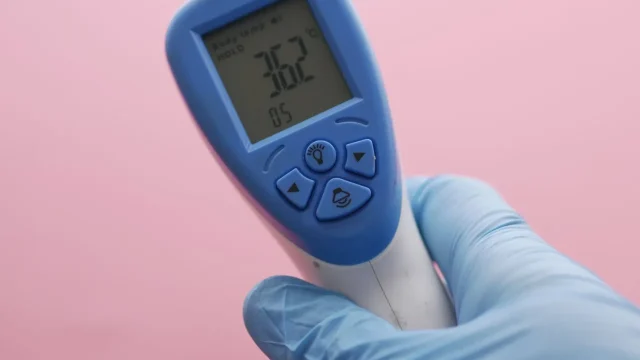
- Infrared guns read surfaces only. They are useful for pans and grills but cannot tell you if meat is cooked inside.
A meat thermometer is the only reliable way to know that meat has reached a safe internal temperature. This guide explains the three main types, the specifications worth comparing, and a shortlist of well-known models. Each model’s key figures come from the manufacturer’s own page, which is linked on every card.
The three types of meat thermometer
| Type | How it works | Best for | Watch out for |
|---|---|---|---|
| Instant-read probe | You insert the probe for a few seconds, read it, then remove it. | Steaks, chops, chicken pieces, burgers, baking | Not oven-safe; you must open the oven or lid to check |
| Leave-in (wired) probe | The probe stays in the food, with a cable to a display outside the oven. | Roasts, whole poultry, smokers | Cable routing; probe and cable heat limits |
| Wireless probe | A cable-free probe stays in the food and sends readings to an app. | Rotisserie, smoking, long cooks | Wireless range, charging, and whether accuracy is published |
What to compare before you buy
1. Stated accuracy, and over what range
Manufacturers usually quote accuracy (for example ±0.9°F) over a specific band, often around cooking temperatures, with looser figures outside it. Read the small print. A thermometer that is ±1°F around 145–165°F is what matters for meat.
2. Response time
Faster readings mean less time with the oven or grill open. Treat published response times as manufacturer claims. They are measured under the maker’s own conditions.
3. Water resistance
IP67 means the thermometer can be briefly submerged. IP65 means it resists splashes and can be rinsed, but should not be submerged.
4. Calibration
Some models let you recalibrate, and a few ship with a calibration certificate. Whatever you buy, you can check accuracy at home with an ice bath. See how to calibrate a thermometer.
5. Display and ergonomics
A backlit, auto-rotating display and a long enough probe (roughly 4 inches or more for thick roasts) make a real difference when you are reaching over a hot grill.
Models worth comparing
We have not lab-tested these units. They are well-known models in each category, and the specifications shown are as published by the manufacturer. Read our review methodology to see how we choose.
ThermoPro TP19H
Instant-read probe (budget)
An affordable instant-read with a backlit, auto-rotating display and a 4-inch stainless probe.
- Range
- -58 to 572°F (-50 to 300°C)
- Accuracy
- ±0.9°F (14 to 212°F)
- Response
- 1 second
- Water resistance
- IP65 (rinse, don’t submerge)
- Battery
- 1× AAA
Advantages
- Low cost for an instant-read
- Backlight and auto-rotating display
- User calibration function
Limitations
- IP65 is splash-resistant, not submersible
- Stated accuracy range is narrower than its full range
Our take: A sensible first thermometer for home cooks on a budget.
ThermoWorks Thermapen NANO
Instant-read thermocouple probe
ThermoWorks’ successor to the Thermapen ONE: a folding thermocouple probe for quick spot checks on steaks, roasts and baking.
- Range
- -58 to 572°F (-50 to 300°C)
- Accuracy
- ±0.5°F (-4 to 248°F)
- Response
- 0.4 seconds
- Water resistance
- IP67
- Battery
- 1× AAA, 1,000 hours
Advantages
- Very fast stated response time
- IP67 waterproof rating
- Ships with a NIST-traceable calibration certificate
Limitations
- Premium price bracket
- Spot checks only — not a leave-in probe
Our take: A strong choice if speed and a documented calibration certificate matter to you.
MEATER Plus
Wireless leave-in probe
A truly wire-free probe that stays in the meat and reports internal and ambient temperature to an app.
- Wireless range
- Up to 165 ft
- Max internal
- 212°F
- Max ambient
- 527°F
- Connectivity
- Bluetooth LE 4.0
- Battery
- Rechargeable, 24+ hours
Advantages
- No wires through the oven door or lid
- Reads internal and ambient temperature
- Dishwasher-safe probe
Limitations
- Manufacturer does not publish an accuracy figure
- Range depends on obstructions — keep the charger near the cooker
Our take: Convenient for long cooks; pair it with an instant-read for spot checks.
Side-by-side specifications
| Model | Type | Temperature range | Stated accuracy | Best for |
|---|---|---|---|---|
| ThermoPro TP19H | Instant-read | -58 to 572°F | ±0.9°F (14–212°F) | Budget everyday cooking |
| ThermoWorks Thermapen NANO | Instant-read | -58 to 572°F | ±0.5°F (-4 to 248°F) | Fast, precise spot checks |
| MEATER Plus | Wireless leave-in | Internal max 212°F; ambient max 527°F | Not published | Roasts and smoking |
Specifications were checked on each manufacturer’s website in November 2026 and may change. Check the product page before you buy.
Our recommendation
If you only buy one thermometer, buy a good instant-read probe. It covers almost every everyday cooking job. Add a leave-in or wireless probe later if you regularly cook large roasts or smoke meat. An infrared thermometer is a nice extra for griddles and pizza stones, but it is not a substitute. See infrared vs probe thermometers.
Sources: manufacturer product pages linked on each card; FoodSafety.gov temperature chart.