Editor’s note: This guide replaces our earlier built-in grills article, which is no longer available. It was rewritten in November 2026 as a planning and buying guide for built-in (drop-in) grills in outdoor kitchens. We haven’t tested specific built-in grills. Always follow the manufacturer’s installation instructions and your local codes.
Quick answer
- A built-in grill is a grill head without a cart, designed to drop into a counter or island in an outdoor kitchen.
- Choose the fuel first: natural gas (a permanent supply line, no tanks) or propane (tank inside the island or a dedicated line). Many models come in both versions, and they aren’t interchangeable without the right conversion kit.
- Plan the cut-out and ventilation before you build. Every model has its own cut-out dimensions and venting requirements, and many need an insulated jacket if the island is made of combustible materials.
- Look for quality stainless steel, heavy grates, enough burners for two-zone cooking, good lighting and access to service parts.
A built-in grill is the centerpiece of an outdoor kitchen. Unlike a freestanding grill, it’s set into a masonry or framed island, so it needs to be chosen and planned before the island is built. This guide covers the decisions that matter most: fuel, size, materials, features and safe installation.
Built-in vs freestanding grills
| Built-in grill | Freestanding grill | |
|---|---|---|
| Installation | Set into an island; needs planning and often a professional installer | Ready to use on its cart |
| Fuel | Natural gas line or propane | Usually propane tank; some natural gas versions |
| Look | Integrated, permanent | Movable |
| Storage and prep space | Island counters, drawers and doors | Side shelves and cart cabinet |
| Flexibility | Fixed position | Can be moved or replaced easily |
Key decisions
1. Fuel: natural gas or propane
Natural gas means no tanks to refill, but you need a gas line run to the island by a qualified professional. Propane works anywhere, with a tank stored in a ventilated island compartment or a supply line from a larger tank. Grills are built for one fuel or the other. Converting requires the manufacturer’s approved kit, and often a technician.
2. Size and burners
Built-in grills are commonly sold by width. Choose enough burners to run at least two heat zones, so you can sear on one side and cook gently on the other. Think about how many people you usually cook for and whether you’ll use a rotisserie or cook large roasts.
3. Materials
Stainless steel is standard, but grades and thickness vary. Heavier construction holds heat better and lasts longer outdoors. Look at the grates (cast stainless or heavy rods), the burners (stainless or cast brass) and the flame tamers or heat plates, since these parts take the most abuse.
4. Features
- Infrared or high-heat sear zone
- Rear rotisserie burner
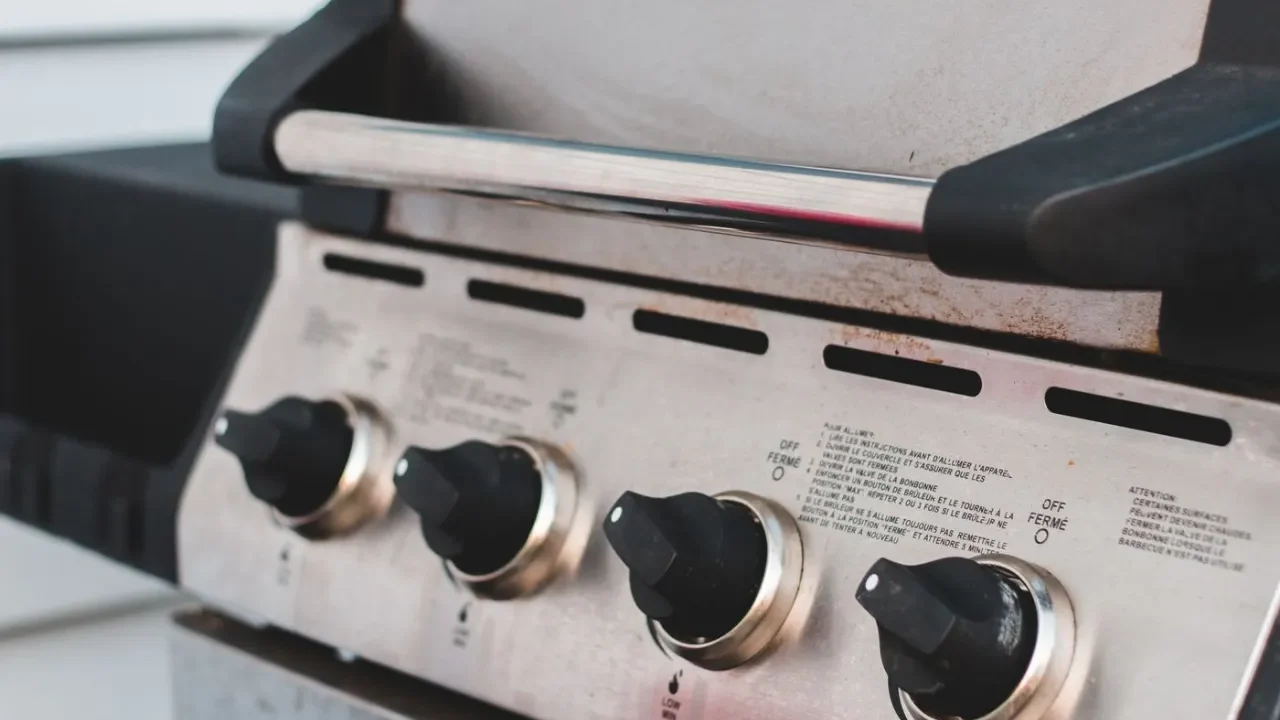
- Reliable ignition and flame-failure safety
- Interior and control-knob lighting for evening cooking
- Smoker box or tray
- A slide-out grease tray that’s easy to reach
5. Support and parts
Because a built-in grill is part of your house, long-term parts availability matters more than with a cart grill. Check the warranty terms for burners, housing and grates, and whether replacement parts are sold directly.
Installation and safety
- Follow the manufacturer’s cut-out dimensions exactly and build the island to suit.
- Use an insulated jacket if the manufacturer requires one for combustible construction.
- Provide ventilation in the island as specified, especially where propane is stored. Propane is heavier than air and can collect in enclosed spaces.
- Have gas connections made and leak-tested by a qualified professional, and follow local codes and permit rules.
- Keep the required clearances from the house, overhangs and anything combustible.
- Never use a grill indoors or in an enclosed space.
Cooking well on a built-in grill
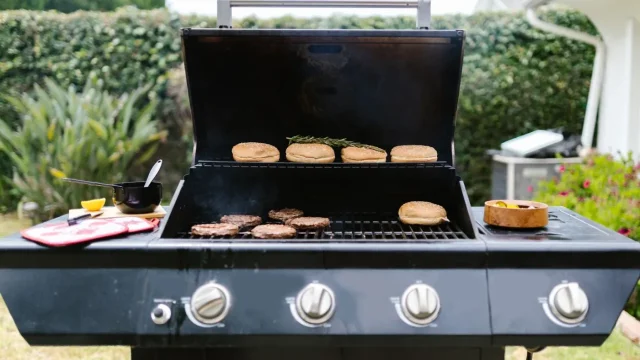
A built-in grill cooks just like a freestanding gas grill. Preheat with the lid closed, use two zones, and check food with a thermometer rather than relying on the lid gauge. Safe minimums are 145°F for whole cuts of beef, pork and lamb (plus a 3-minute rest), 160°F for burgers and 165°F for poultry. See our safe cooking temperature chart and how to choose a meat thermometer.
If you’re not ready for a full outdoor kitchen, a quality freestanding grill may serve you just as well. See our best gas grills under $300, Weber Summit S-470 vs S-670 and how long Weber grills last.
Check Built-In Grills on Amazon
Bottom line
Choose a built-in grill before you build the island: settle the fuel type, size and features, then design the island around the manufacturer’s cut-out and ventilation requirements. Professional gas installation and correct clearances matter as much as the grill itself.
FAQ
Can I convert a built-in grill from propane to natural gas?
Only with the manufacturer’s approved conversion kit, and ideally by a qualified technician. Many grills are sold in separate propane and natural gas versions.
Do built-in grills need ventilation?
Yes. Islands generally need vent panels, especially when a propane tank is stored inside. Follow the grill maker’s instructions.
What is an insulated jacket?
An insulating sleeve that sits between the grill and the island. Manufacturers often require one when the island is built from combustible materials such as wood framing.
Sources: Food-safety temperatures: FoodSafety.gov. Installation requirements vary by manufacturer and local code; always follow your grill’s installation manual. Checked November 2026.