Editor’s note: Originally published May 2021. Reviewed and updated November 2026. Some models mentioned here may have been updated or discontinued since; check current availability and specifications before buying.
Medical disclaimer: This article is general information, not medical advice. Ask a doctor or pharmacist about your situation.
Quick answer
- The Kinsa Smart Ear Thermometer is an infrared ear thermometer that works with a companion smartphone app.
- To use it: open the app, turn the thermometer on, gently straighten the ear canal, place the probe in the ear, press the button and wait for the beep.
- Avoid taking a reading right after physical activity, which can temporarily raise body temperature.
- Ear thermometers are for babies 6 months and older. Rectal readings are the most accurate and best for infants under 3 months.
- A fever is generally 100.4°F (38°C) or higher.
The Kinsa Smart Ear Thermometer is an infrared ear thermometer that pairs with an app on your phone, which makes checking and keeping track of temperatures easier, especially for parents. Below we explain how to use it step by step, then compare ear thermometers with the other common ways to take a temperature.
This guide is based on manufacturer information and general usage guidance. Always follow the instructions in your thermometer’s manual.
How to use the Kinsa Smart Ear Thermometer
Before you start, avoid physical activity for a while beforehand. Exercise can temporarily raise body temperature and give a misleadingly high reading.
- Open the Kinsa app on your phone.
- Turn the thermometer on using the large button at the top center of the device.
- Gently pull the ear to straighten the ear canal. The right technique differs for young children and adults, so check the manual for the correct direction.
- Place the probe snugly in the ear canal, pointed straight in.
- Press the button again. After a moment you will hear a beep, and the reading appears.
Because the thermometer uses infrared to measure temperature, the probe needs a clear, straight path into the ear canal. A crooked angle can lead to an inaccurate reading.
For a broader walkthrough of every method, see our guide on how to take a temperature.
Ear vs other types of thermometers
There are several ways to take a body temperature. Each has trade-offs in accuracy, comfort and which ages it suits.
Armpit (axillary)
Armpit readings are the simplest: raise the arm, place the thermometer tip in the center of the armpit and lower the arm to hold it in place. A digital thermometer beeps when the reading is ready.
The downside is accuracy. Armpit readings are generally less accurate than other methods, so if you get a borderline result, confirm it with another method.
Oral
An oral thermometer goes under the tongue. Placement matters: if the tip isn’t positioned correctly, the result won’t be accurate either. Oral readings are recommended for children age 4 and older.
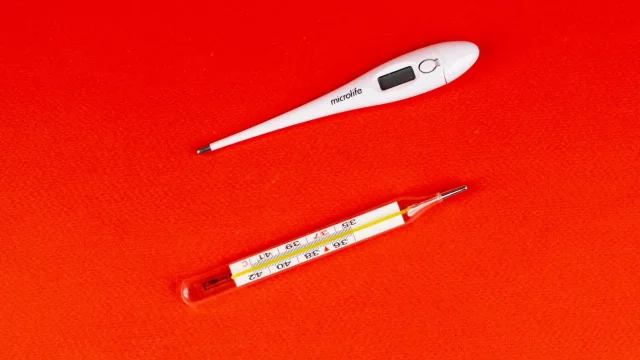
Use a digital thermometer rather than an old glass mercury thermometer. Mercury is harmful, and a broken glass thermometer in the mouth is a real risk.
Ear (tympanic)
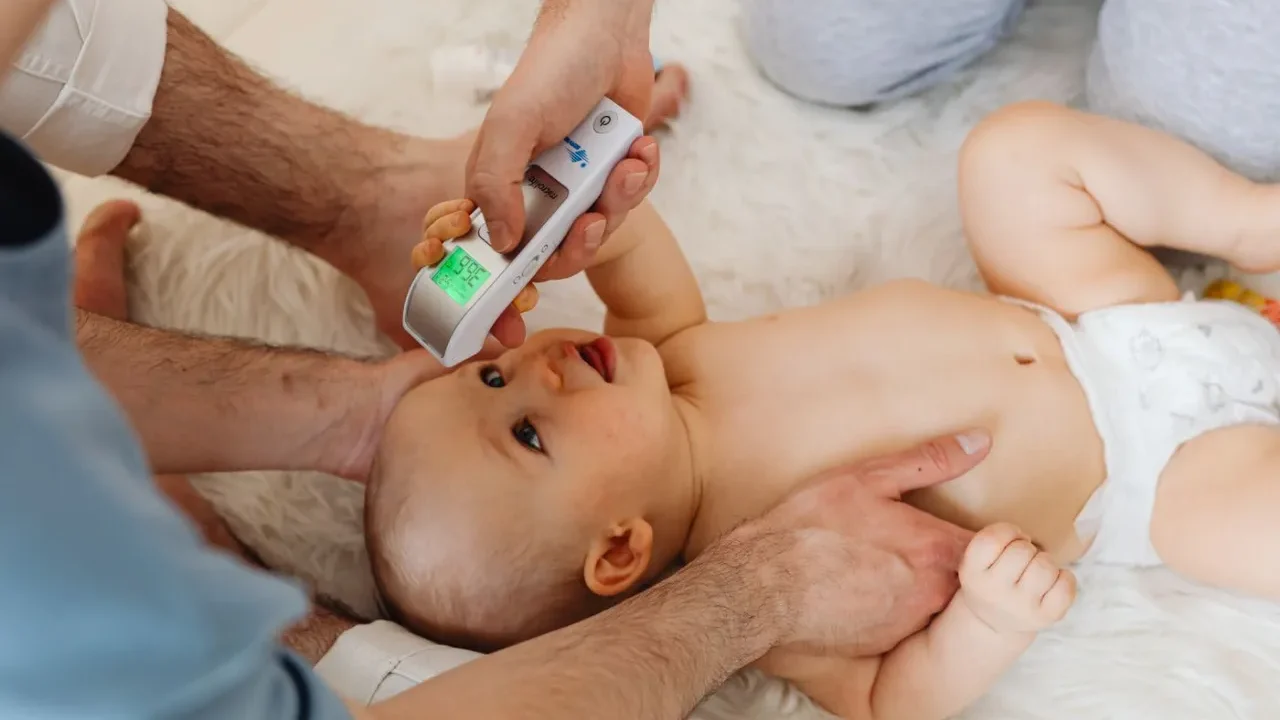
Ear thermometers like the Kinsa read temperature through the ear canal using infrared. They are quick, but technique matters: you need to straighten the ear canal so the probe has a clear view, and the exact method varies by brand. Ear thermometers are for babies 6 months and older.
Rectal
Rectal readings are the most accurate and are best for infants under 3 months. Use a dedicated digital thermometer, apply a lubricant to the tip, insert it only a short way and stop if you feel any resistance. Disposable probe covers are available at pharmacies.
Forehead
Forehead (temporal) thermometers are another non-contact or quick-swipe option. For a closer look at infrared models, see our guide to medical infrared thermometers.
Cleaning your thermometer
Clean any thermometer after every use. Wipe the tip with an alcohol swab, which is quick and kills germs, or wash it if the manufacturer says it is safe to do so. Disposable probe covers add another layer of hygiene. Our guide on how to clean a thermometer has more detail.
When to call a doctor
A fever is generally 100.4°F (38°C) or higher. Call a doctor right away for a baby 2 months or younger with a rectal temperature of 100.4°F or higher. For anyone else, ask your doctor or pharmacist when a fever needs attention.
Final thoughts
The Kinsa Smart Ear Thermometer combines a standard infrared ear reading with a phone app, which can make it easier to keep track of readings. It is a good fit for families with children over 6 months, but keep a rectal digital thermometer on hand for young infants. Read the Kinsa manual before first use; it covers the exact steps, ear positioning for different ages and troubleshooting.
FAQ
Does the Kinsa ear thermometer need a phone?
It is designed to work with the Kinsa smartphone app, and the first step in using it is opening the app.
Can I use an ear thermometer on a newborn?
Ear thermometers are for babies 6 months and older. For infants under 3 months, rectal readings are the most accurate and recommended method.
What temperature counts as a fever?
A fever is generally 100.4°F (38°C) or higher.