Editor’s note: Originally published May 2021. Reviewed and updated November 2026.
Medical disclaimer: This article is general information, not medical advice. Ask a doctor or pharmacist about your situation.
Quick answer
- Digital thermometer: place it, wait for the beep, and read the number once the display is steady. Read the manual first, because settings can change what the screen shows.
- Glass thermometer: hold it level by the end away from the bulb, find the line closest to the top of the liquid, and read it on the Fahrenheit or Celsius scale.
- A fever is generally 100.4°F (38°C) or higher. Rectal readings are the most accurate and best for infants under 3 months.
- Underarm readings are the easiest to take but the least accurate.
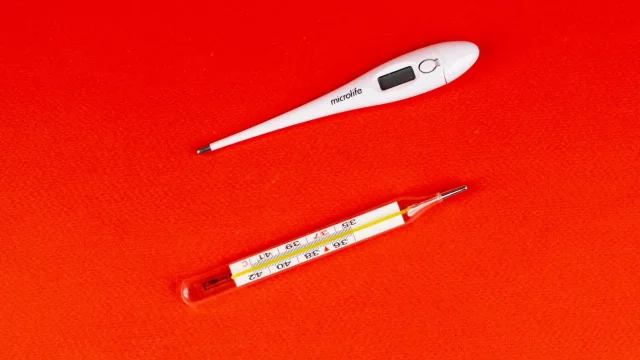
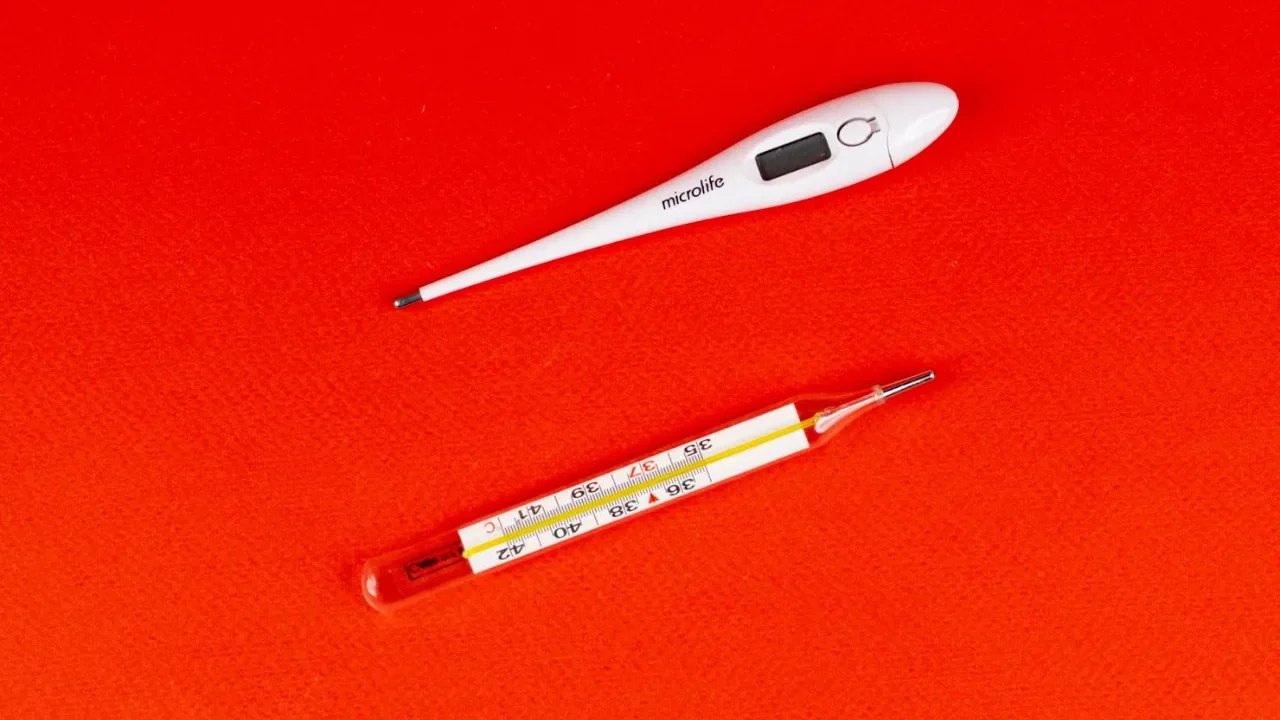
Reading a thermometer is simple once you know which type you have. A digital thermometer shows the temperature as a number when it beeps; a glass thermometer is read by matching the top of the liquid column to the nearest marked line. Below, we answer the most common reader questions: reading a thermometer for fever, for children, under the arm, in Celsius, and on a wall or outdoor thermometer.
How to read a thermometer for fever
The steps depend on whether you use a digital or a traditional glass thermometer, and on where you take the reading. A thermometer can touch the body in three common places:
- Oral (under the tongue): place the tip under the tongue and keep the mouth closed until the reading is complete.
- Underarm (armpit): place the tip against the skin in the armpit and hold the arm against the body. This is the easiest method but the least accurate; readings tend to come out lower than the true body temperature.
- Rectal: not the easiest method, but the most accurate. Insert the tip only a short distance, as the thermometer’s instructions describe, and stop if you feel any resistance.
With a digital thermometer, the device beeps once the temperature has settled and the display stops changing, so you simply read the number. Clean the thermometer properly after every use, especially after a rectal reading; see how to clean a thermometer.
As a reference point, normal body temperature is commonly given as 98.6°F (37°C), and a fever is generally 100.4°F (38°C) or higher. For a step-by-step walkthrough of each method, read our guide on how to take a temperature.
How to read a glass thermometer
Traditional glass thermometers have a thin tube marked with temperature lines. The liquid inside (mercury in older thermometers) expands as it warms and climbs the tube. Many glass thermometers are marked in Celsius on one side and Fahrenheit on the other.
- Hold the thermometer level, by the end away from the bulb. Holding the bulb lets your own body heat push the liquid up and spoils the reading.
- Turn it slowly until you can see the thin line of liquid clearly.
- Find the marked line closest to the top of the liquid. That is the temperature.
- Read it on whichever scale you prefer, Fahrenheit or Celsius.
Many medical glass thermometers also have a marked line at normal body temperature (98.6°F or 37°C), which helps you see at a glance how far above or below normal a reading is.
How a mercury thermometer works
Mercury is a metal that is liquid at normal temperatures. Like most substances, it expands as it warms and contracts as it cools, and that is what makes it useful for measuring temperature.
The mercury is stored in a small bulb at one end of a sealed glass tube. Heat passes through the bulb into the mercury, which then climbs the tube until it stops at a stable level. Read the nearest mark on the scale at that point, and as with any glass thermometer, don’t hold it by the bulb.
Glass thermometers can break, and mercury is dangerous to handle. Never use a glass mercury thermometer in a child’s mouth; a digital thermometer is simpler and safer.
How to read a digital thermometer
This is the easiest type to read: the temperature appears as digits on the display. The catch is that many digital thermometers offer several modes and settings, such as the temperature unit or the measuring mode, and these change what the screen shows.
Read the manual before you rely on a digital thermometer, so you know which mode it is in and what each symbol means. Otherwise the number you see may not mean what you think it does.
How to read a thermometer for body temperature
Whether you use a digital or a glass thermometer, the process is the same as above: choose the method (oral, underarm or rectal), take the reading, then read the display or the scale. Use the method that suits the person’s age and the thermometer you own.
How to take and read a child’s temperature
Children rarely sit still, so a thermometer that gives a reading quickly helps. Forehead and ear thermometers usually take only seconds, which makes them convenient for kids. Match the method to the child’s age:
- Infants under 3 months: rectal readings are the most accurate and the best choice.
- Ear thermometers: for babies 6 months and older.
- Oral readings: for children age 4 and older.
Call a doctor right away if a baby 2 months or younger has a rectal temperature of 100.4°F or higher.
Digital thermometers are simpler and safer for children than glass ones; just check the manual so you understand the display. If you are shopping for an ear thermometer, our Braun ThermoScan 5 vs 7 comparison covers two popular models.
How to read a thermometer under the arm
Take the thermometer out of the armpit once the reading is complete (when a digital thermometer beeps), then read it the same way as any other: the number on a digital display, or the line nearest the top of the liquid on a glass thermometer. Remember that underarm readings tend to be lower than oral or rectal ones.
How to read a thermometer in Celsius
Reading a Celsius thermometer is no different from reading a Fahrenheit one; only the scale changes. On a glass thermometer, read the side marked °C. On a digital thermometer, switch the unit in the settings if needed (check the manual). For quick conversions, see our guide to Fahrenheit vs Celsius.
How to read an indoor or outdoor wall thermometer
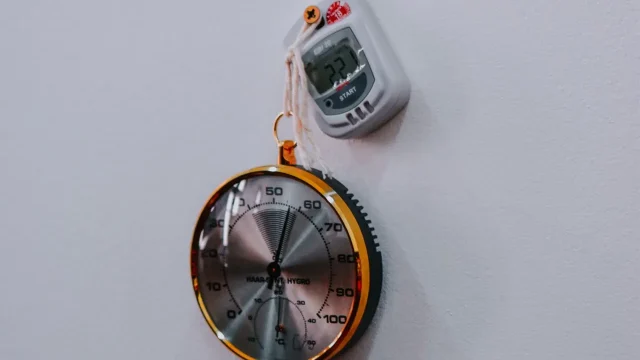
Glass thermometers for rooms and gardens are often mounted on a wooden or plastic board, with Celsius marks on one side of the tube and Fahrenheit on the other. Stand straight in front of the thermometer with your eyes level with the top of the liquid, then read the mark closest to it on the scale you want. For a digital alternative, see our indoor outdoor thermometer guide.
Final thoughts
Whichever thermometer you use, read it at eye level, avoid touching the sensing end, and know which scale or mode you are looking at. Clean it properly after every use and make sure it is undamaged before the next one.
FAQ
What temperature counts as a fever?
A fever is generally 100.4°F (38°C) or higher.
Which method gives the most accurate reading?
Rectal readings are the most accurate. Underarm readings are the easiest but the least accurate.
Why shouldn’t I hold a glass thermometer by the bulb?
The heat from your hand warms the bulb and pushes the liquid up, so the reading comes out too high.