Medical disclaimer: this article is general information, not medical advice, and Thermometer Guru is not a healthcare provider. If you are worried about someone’s health, contact a doctor. In an emergency, call your local emergency number.
Body temperature can be measured in several places: rectally, in the mouth, in the ear, across the forehead, or under the arm. Each method has its own accuracy and suits different ages. This summary follows the guidance published by the American Academy of Pediatrics on HealthyChildren.org.
What counts as a fever?
According to HealthyChildren.org, a fever is usually a temperature of 100.4°F (38°C) or higher.
Methods compared
| Method | Age guidance (AAP / HealthyChildren.org) | Notes |
|---|---|---|
| Rectal | Any age; gives the best reading, especially for infants under 3 months | Most accurate. Label a rectal thermometer so it is never used orally. |
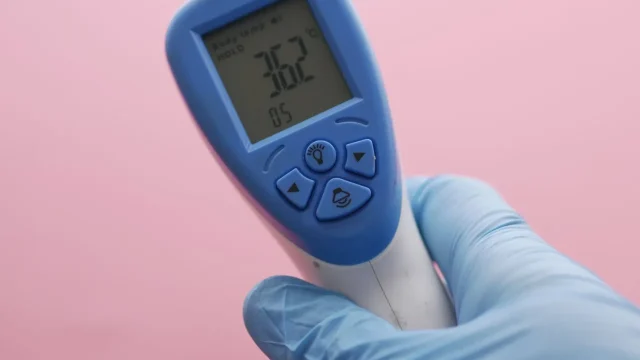
| Forehead (temporal artery) | Any age | The next most accurate method. |
| Ear (tympanic) | 6 months and older | Accurate if placed correctly; not reliable in younger babies, whose ear canals are too narrow. |
| Oral | Age 4 and older | Accurate if done properly. Wait after eating or drinking, per the device instructions. |
| Armpit (axillary) | Any age, for quick screening | Least accurate. Confirm a high or unexpected result with another method. |
When to call a doctor
HealthyChildren.org advises calling your child’s doctor right away if:
- A baby 2 months old or younger has a rectal temperature of 100.4°F (38°C) or higher
- A fever repeatedly rises above 104°F (40°C) at any age
- The child looks very ill, is unusually drowsy, or is very fussy
- The child has been somewhere very hot, such as an overheated car
- There are other symptoms such as a stiff neck, severe headache, or repeated vomiting or diarrhea
- The child has immune system problems, takes steroids, or has had a seizure
This is not a complete list. Trust your instincts and call if you are concerned.
Tips for accurate readings
- Follow your thermometer’s instructions. Placement and timing differ between models.
- Coming in from the cold? Cold weather can lower ear and forehead readings. HealthyChildren.org suggests waiting 15 minutes indoors before measuring.
- Clean the thermometer before and after each use, as the package directs.
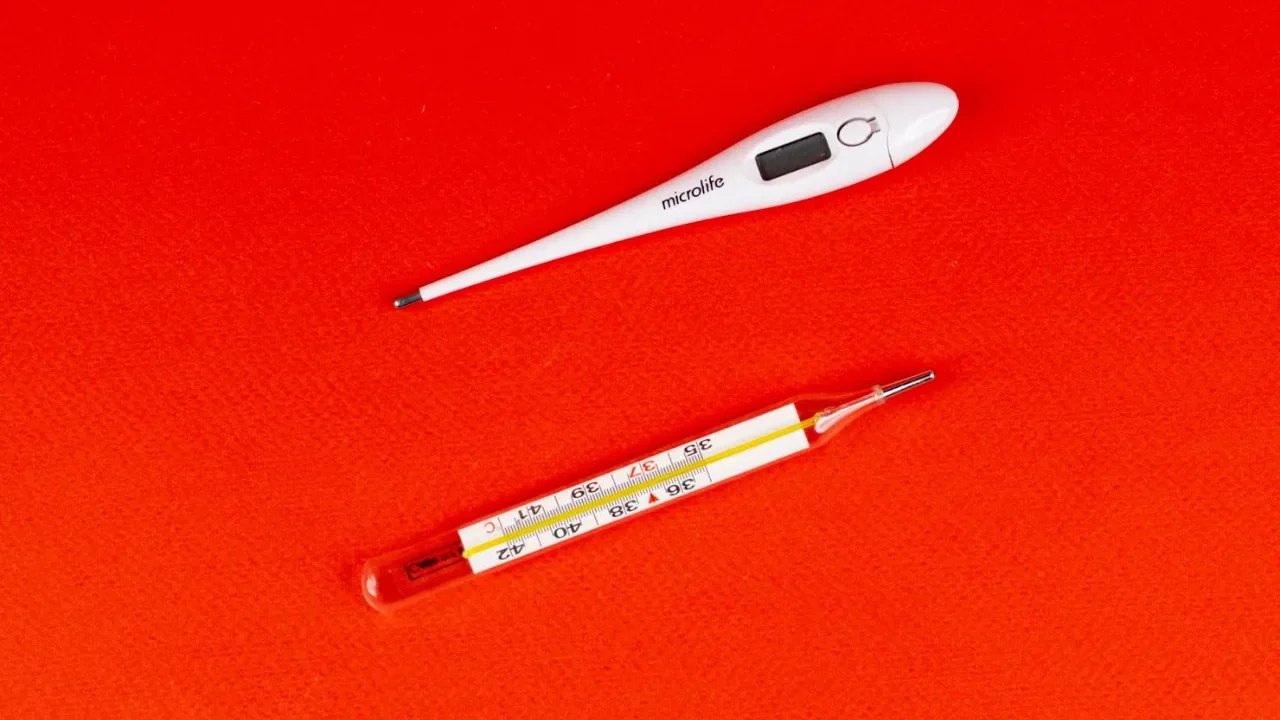
- Don’t use mercury (glass) thermometers. They can break and release toxic mercury. HealthyChildren.org advises removing them from your home.
- Use a thermometer made for people. Infrared “temperature guns” sold for cooking or DIY measure surfaces, and manufacturers such as Etekcity warn against using them on the body. See infrared vs probe thermometers.
Choosing a home thermometer
For families with young children, many parents keep a digital thermometer for rectal or oral use plus a forehead or ear thermometer for quick checks. Ask your pediatrician which method they prefer for your child’s age.
Exergen TemporalScanner TAT-2000C+
Forehead (temporal artery) thermometer
A home temporal artery thermometer that reads with a gentle forehead swipe. Exergen states it is for use on all ages.
- Method
- Forehead swipe (temporal artery)
- Memory
- Last 8 readings
- Display
- Lighted LCD
- Power
- 9V battery (included)
- Water resistance
- Not waterproof
Advantages
- Non-invasive and quick for children
- Manufacturer states suitability from newborns to elderly
Limitations
- Technique matters — follow the swipe instructions
- Must not be rinsed or submerged
Our take: Worth considering for households with young children; follow your pediatrician’s advice on which method to use by age.
Source: American Academy of Pediatrics, HealthyChildren.org — How to Take a Child’s Temperature. Product details from the manufacturer’s website.